A village on the sunny
side of Jelovica.
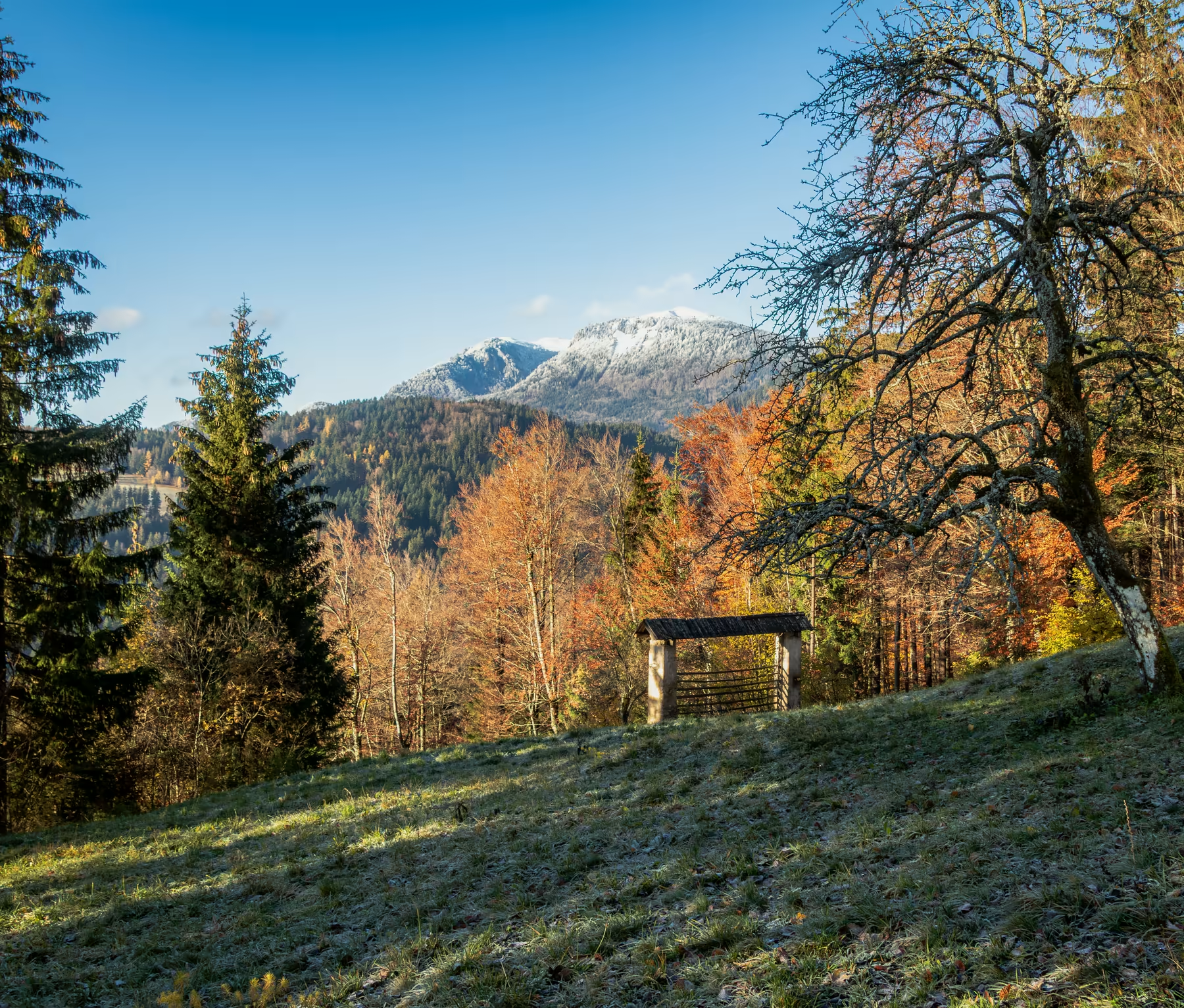
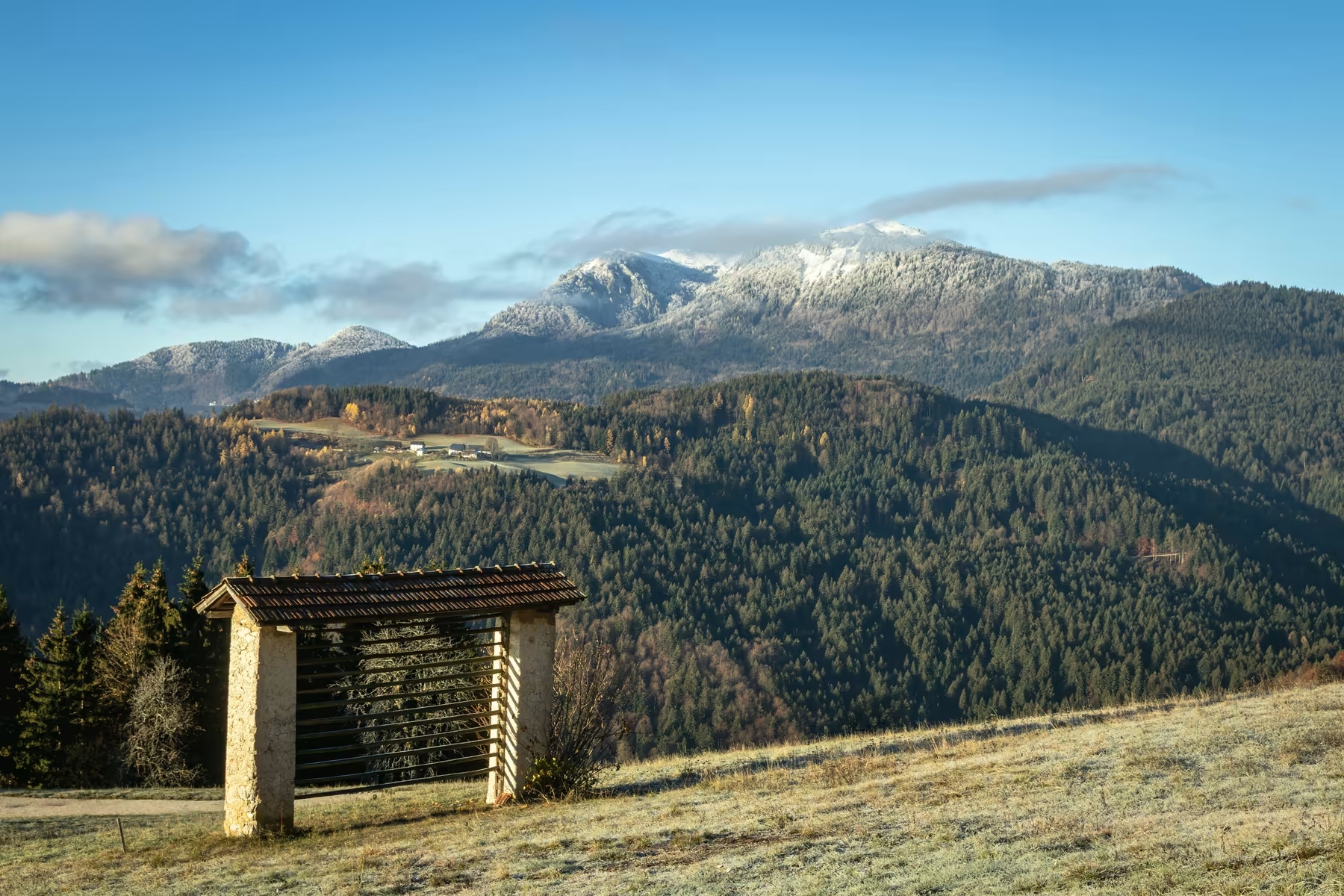
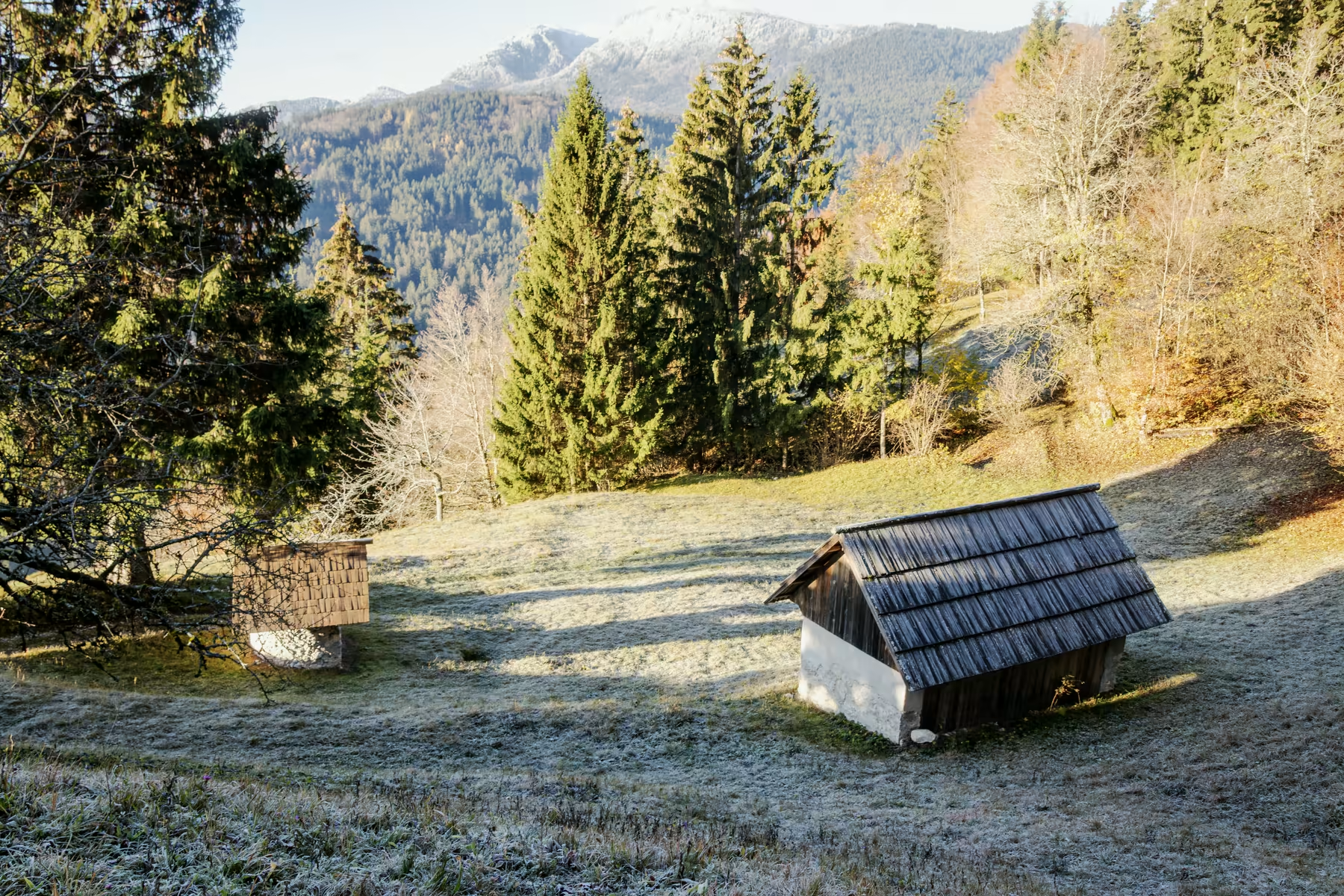
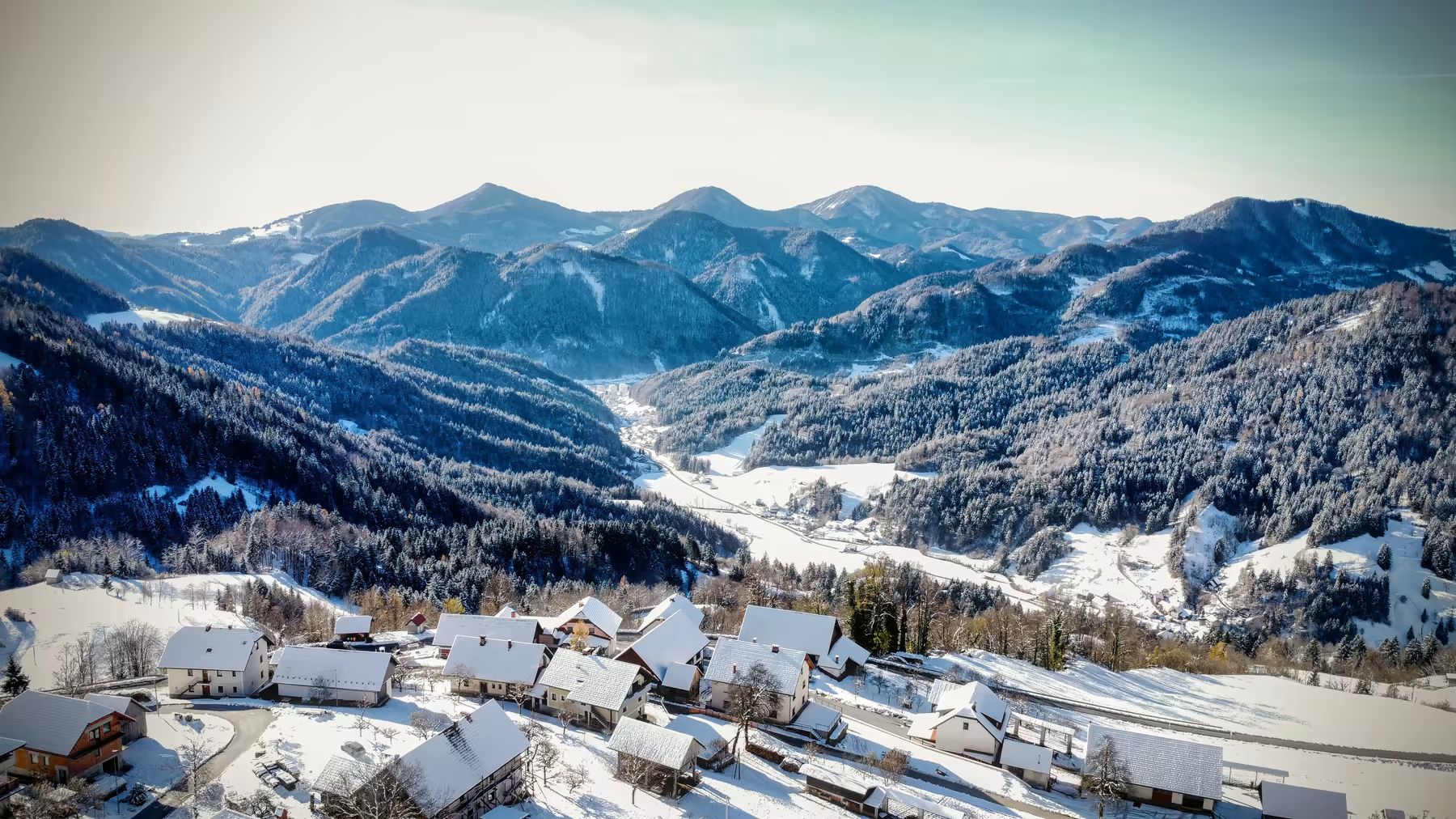
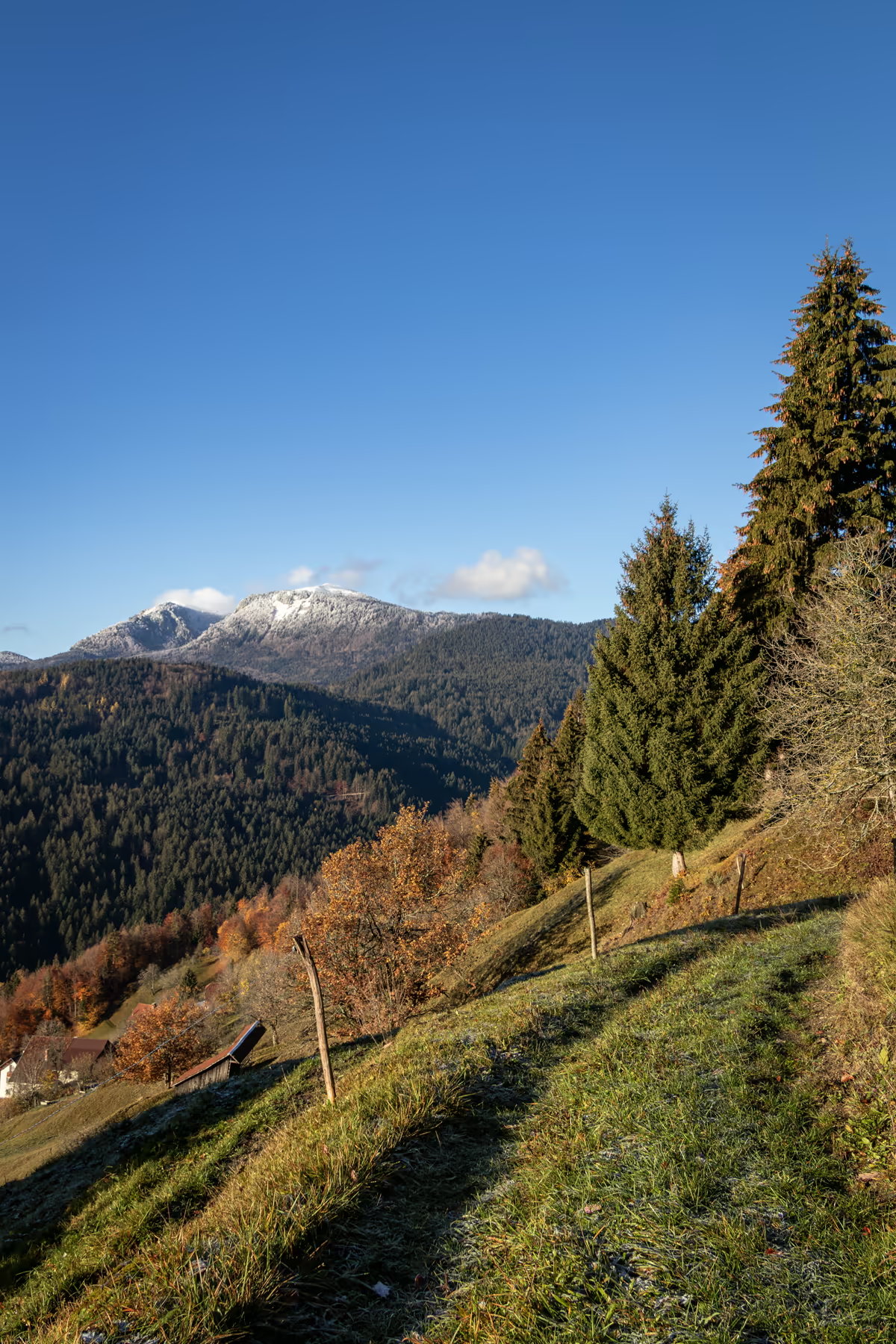
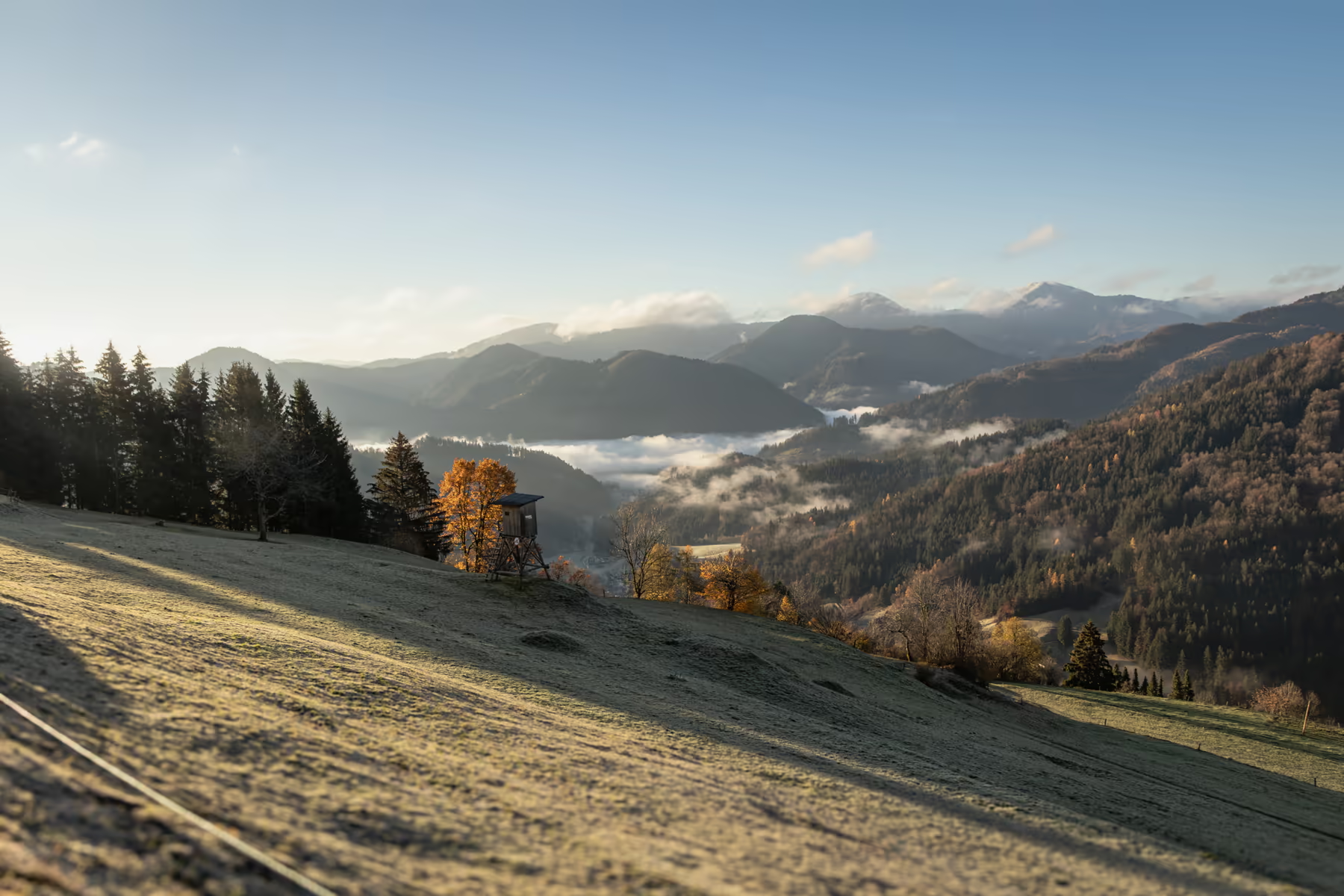
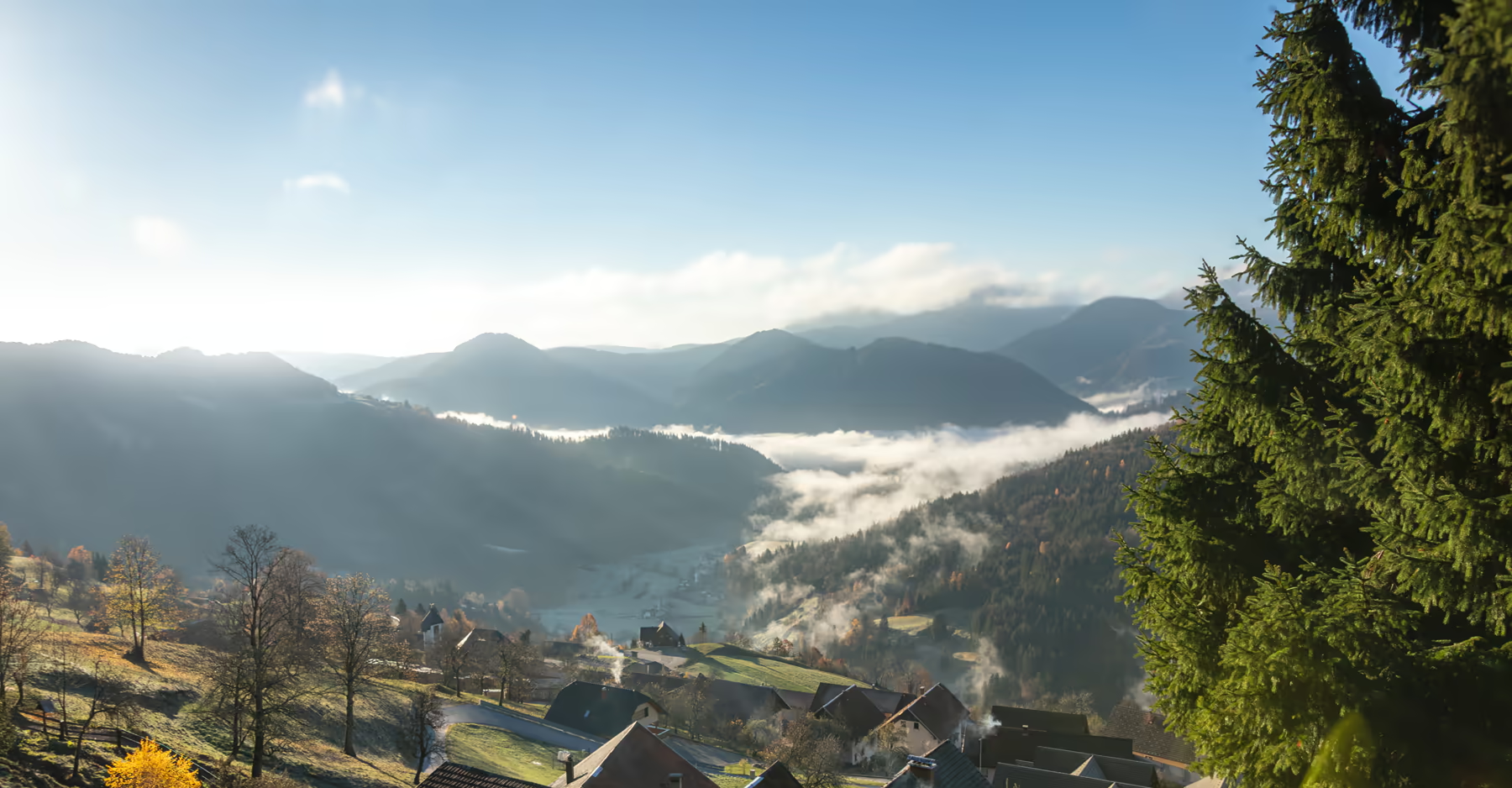
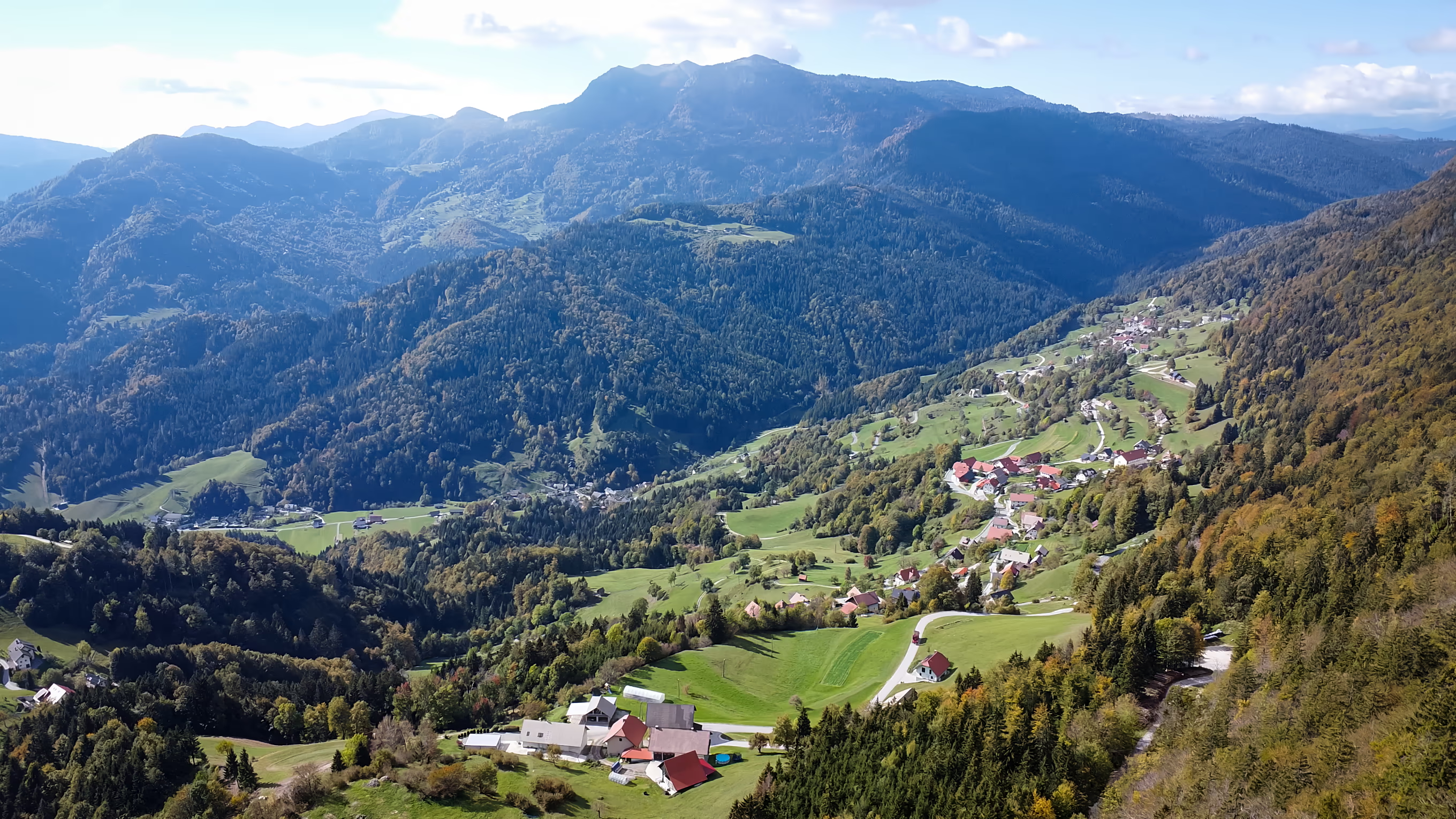
Dražgoše lies on the sunny southern slopes of Jelovica, in the Selška Valley. A small mountain village with a long history.
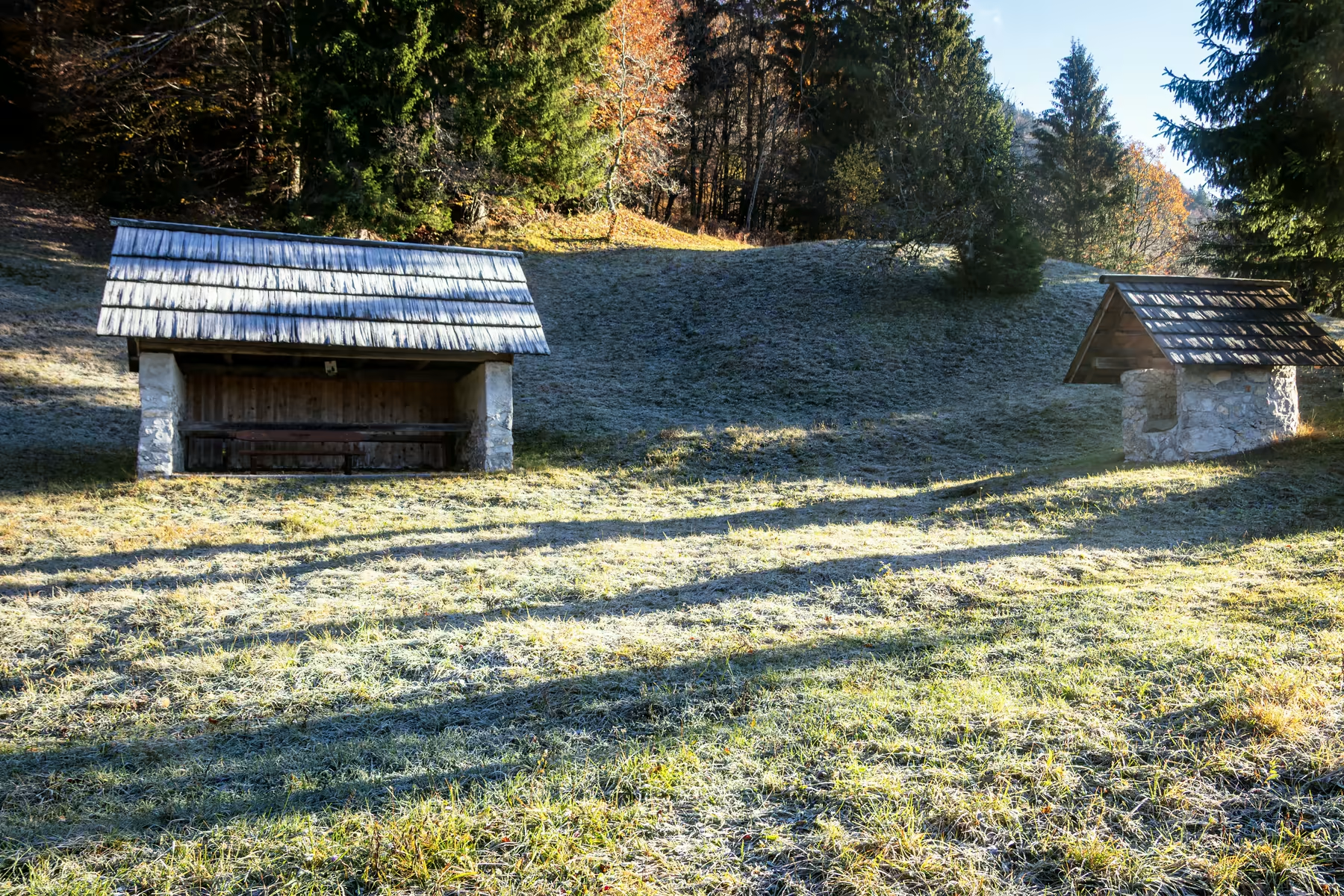
The houses are scattered across sunny meadows at the edge of the forest, with views across the Selška Valley. The village of Dražgoše is made up of hamlets called Na Pečeh, Pri cerkvi, Jelenšče, Na Površnici and the Novaki farm.
History
Location of the village
The village of Dražgoše lies on a sunny slope below Dražgoška gora, which shelters it from the northern winds. The village has adapted to the terrain and is laid out in long rows along terraces. A series of flat terraces from before the Ice Age runs below the cliffs of Jelovica, and their gentler surface leaves room for fields and for the settlement. Dražgoše also includes the solitary Novak farm, which lies on a rounded ridge between the gorges of the Češnjica and Dašnica streams.
The first inhabitants
Today there can be little serious doubt that the area around Rudno and Dražgoše was already settled in prehistoric times. Besides the finds, this is shown by many traces and by the characteristic field names still preserved around both villages.
At Na Pečeh there was a Roman outpost, a hillfort. Towards the end of the 6th century the Slavs settled here. The Loka land register of 1291 states that there were then 19 farms in Dražgoše – 8 at Pri cerkvi, 9 at Na Pečeh and 2 in Jelenšče. In 1825, besides the 19 farms, another 41 cottages were recorded.
The name of the village
The place name Dražgoše appears in the first Loka land register as early as 1291 as Drasigos, and in 1843 as Drashgoshe. These records suggest that the name was derived from the personal name Dražigost.
The church of St. Lucy
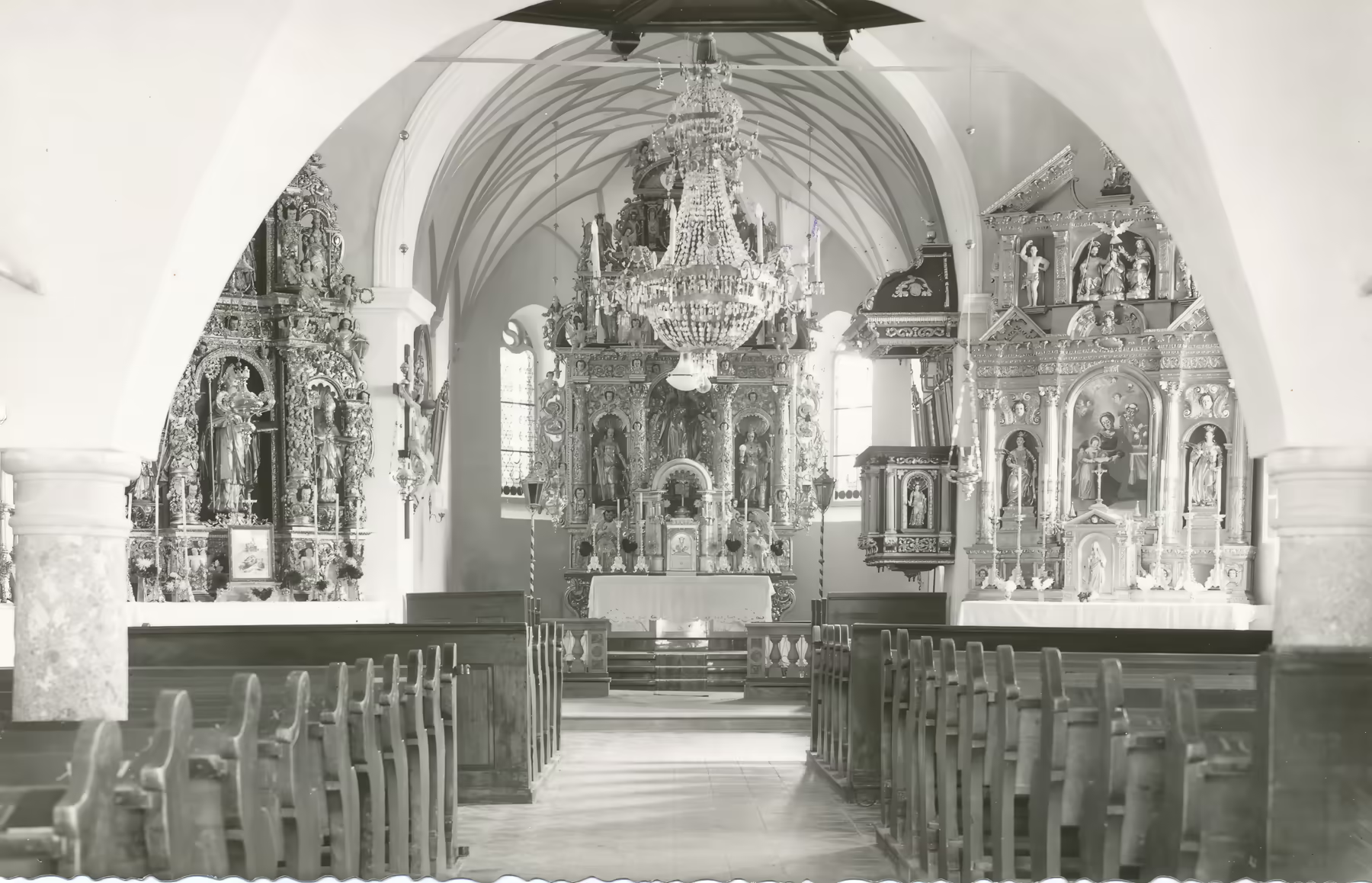
The church in Dražgoše was built between 1642 and 1647 in a commanding position above the village. In the years after 1647 it was furnished with four exceptionally rich golden altars, which rank among the very finest works of 17th-century woodcarving in Slovenia.
The church was large, with a single nave and already strong Baroque features. The main altar was dedicated to St. Lucy, the side altars to St. Quentin (known locally as Novina), St. Anthony of Padua and St. Anne.
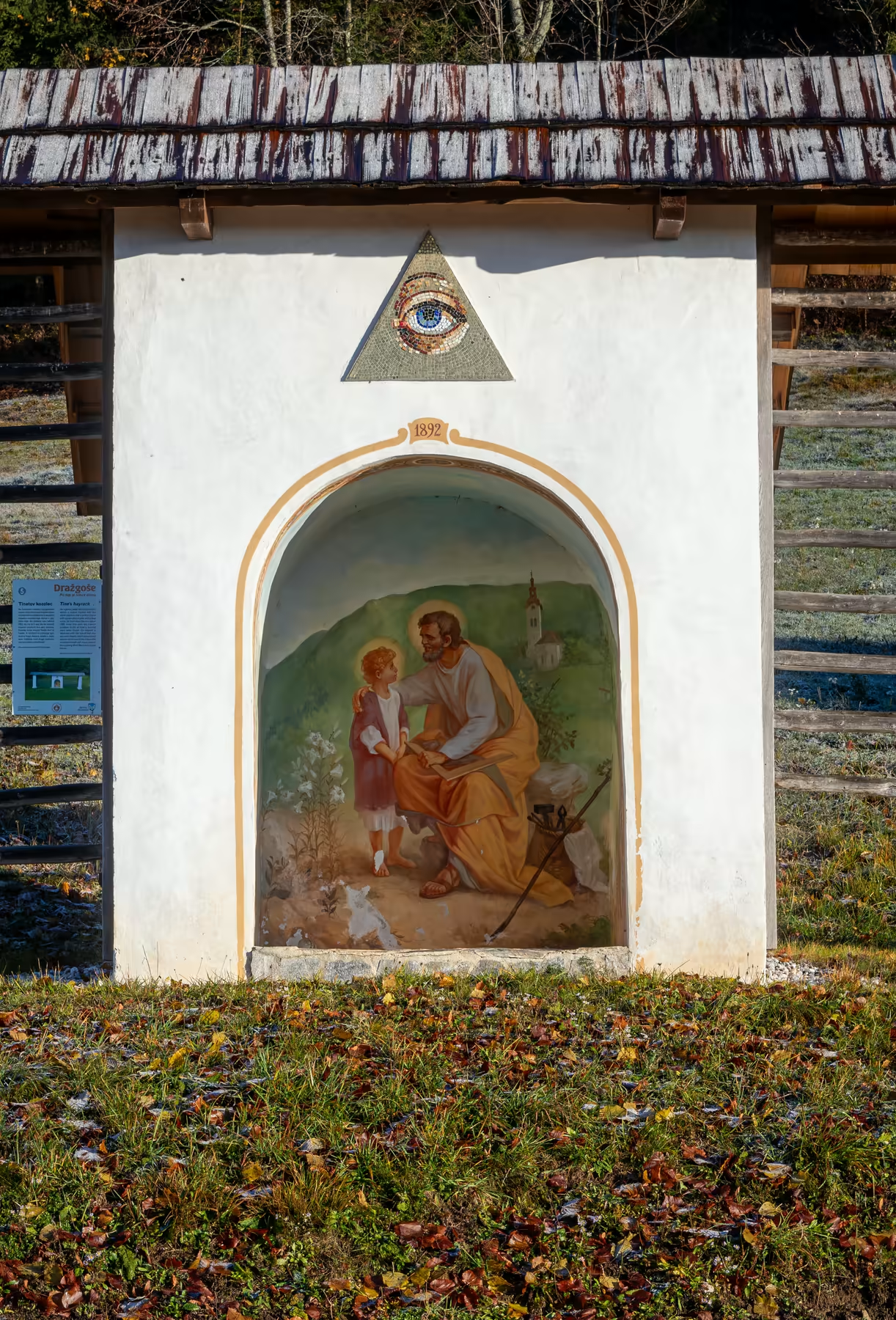
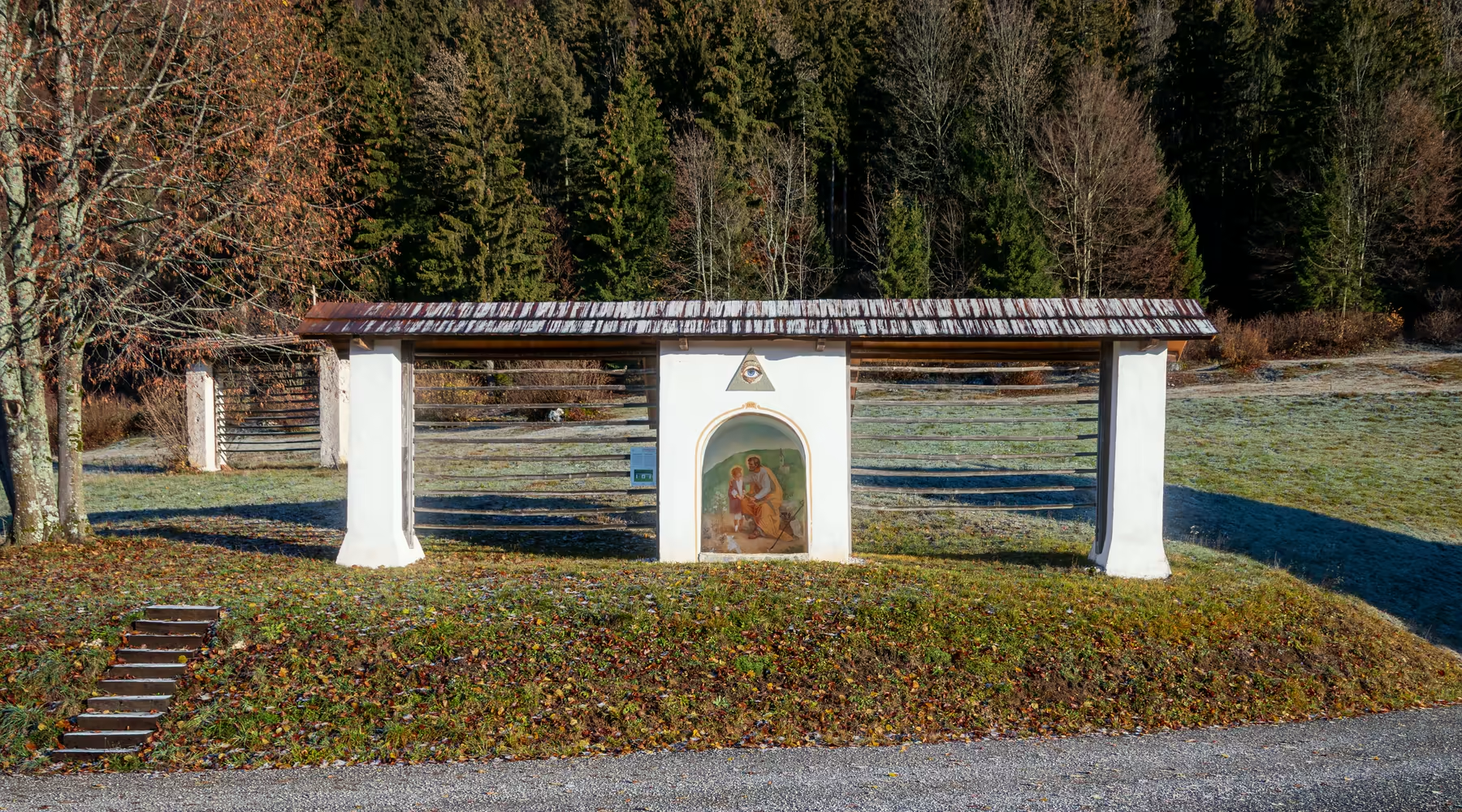
The oldest, from the mid-17th century, is still full of Renaissance elements and feeling. Each later altar comes closer to the approaching Baroque. Within a decade the church became famous as a place of pilgrimage, as shown by a large oil painting of St. Lucy depicting six blind people who miraculously regained their sight in the church. It was probably at that time that eight chapels were built around the village to emphasise its role as a pilgrimage site.
Village centre and societies
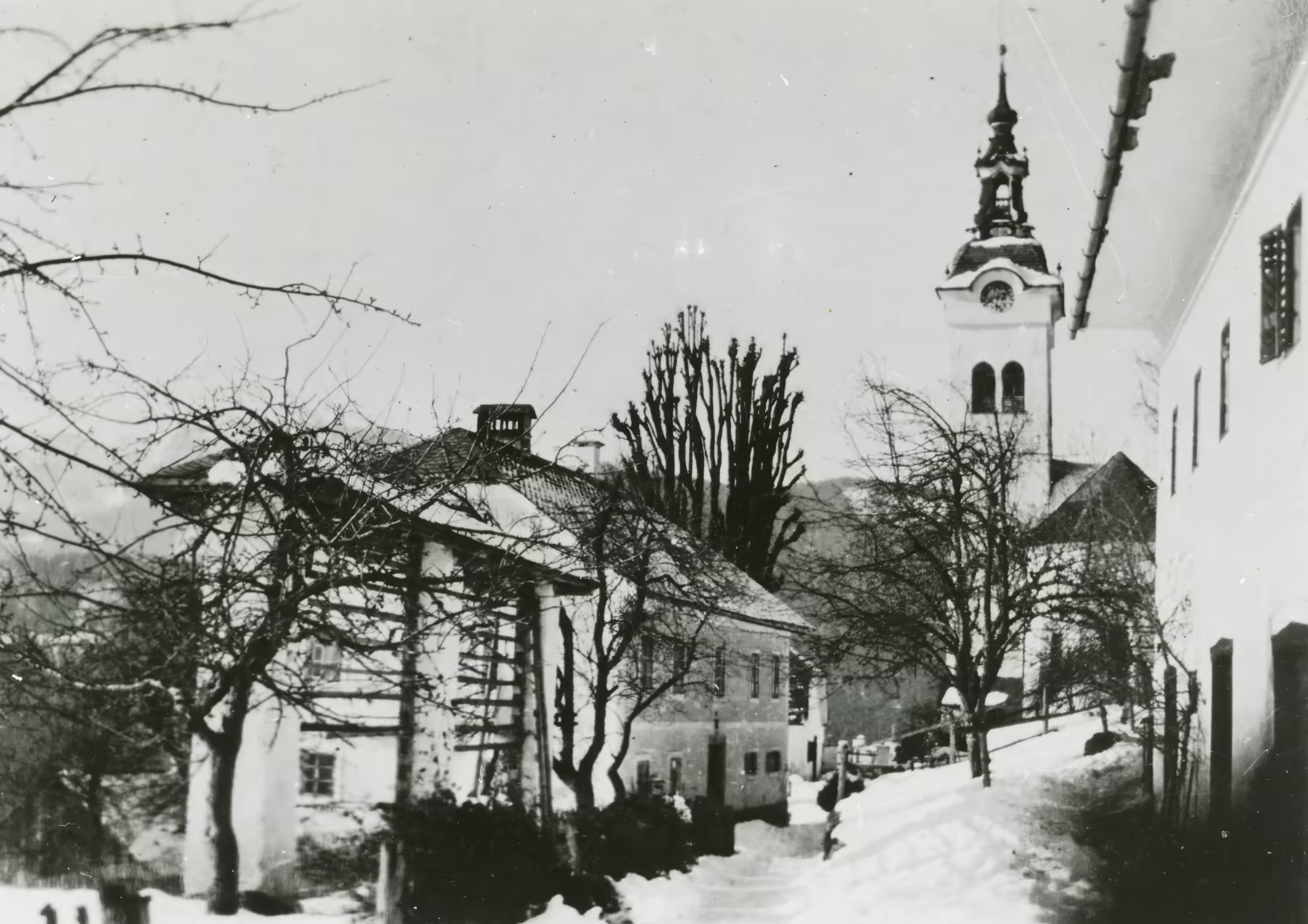
A stronger centre slowly grew up around the church: the rectory, the sexton's house, the Tine farm, and later the school and the community hall. Before the Second World War the village had a Slovenian Catholic educational society with an amateur stage and a tamburica band, a Sokol society and a Marian congregation. Janez Evangelist Krek's play St. Lucy is very well known and is still performed today.
School
The idea of founding a school in Dražgoše first appeared in 1866, but the matter stalled for quite some time. In 1889 the parish priest Franc Boncelj taught the village children reading, writing and arithmetic alongside religious education. In 1894 the sexton's house was converted into a school and the sexton was given a flat in the parish farm building. So in 1894 a regular one-class school was established in Dražgoše, serving Dražgoše and Rudno. The first teacher was Ivan Stupica, who taught in Dražgoše until 1917. Ivan Stupica founded the reading society and the savings and loan bank.
Life before the war
Before the Second World War Dražgoše already had 80 houses – 40 farms and 40 cottages – with 444 inhabitants. People lived mainly from farming. They sowed cereals and flax in the fields; potatoes are first mentioned in 1825. They also grew peas, beans, turnips, cabbage, beetroot, kohlrabi and carrots. Livestock farming and fruit growing were important too. To make a living on their small plots of land, people – especially the cottagers – dug iron ore on Dražgoška gora, made charcoal and cut wood for barrels. At the end of the 19th century the iron industry in Železniki began to decline and people started looking for new work. The men worked as woodcutters and carters.
When the timber trade boomed at the turn of the century, the first cableway for bringing timber down from Jelovica was built in 1902 and a second in 1912. Before that, timber was brought down difficult paths by sledge, with oxen or horses. Before the war Dražgoše had two inns and a shoemaker. Beekeeping and honey production were also part of village life.
Honey breads and barrels
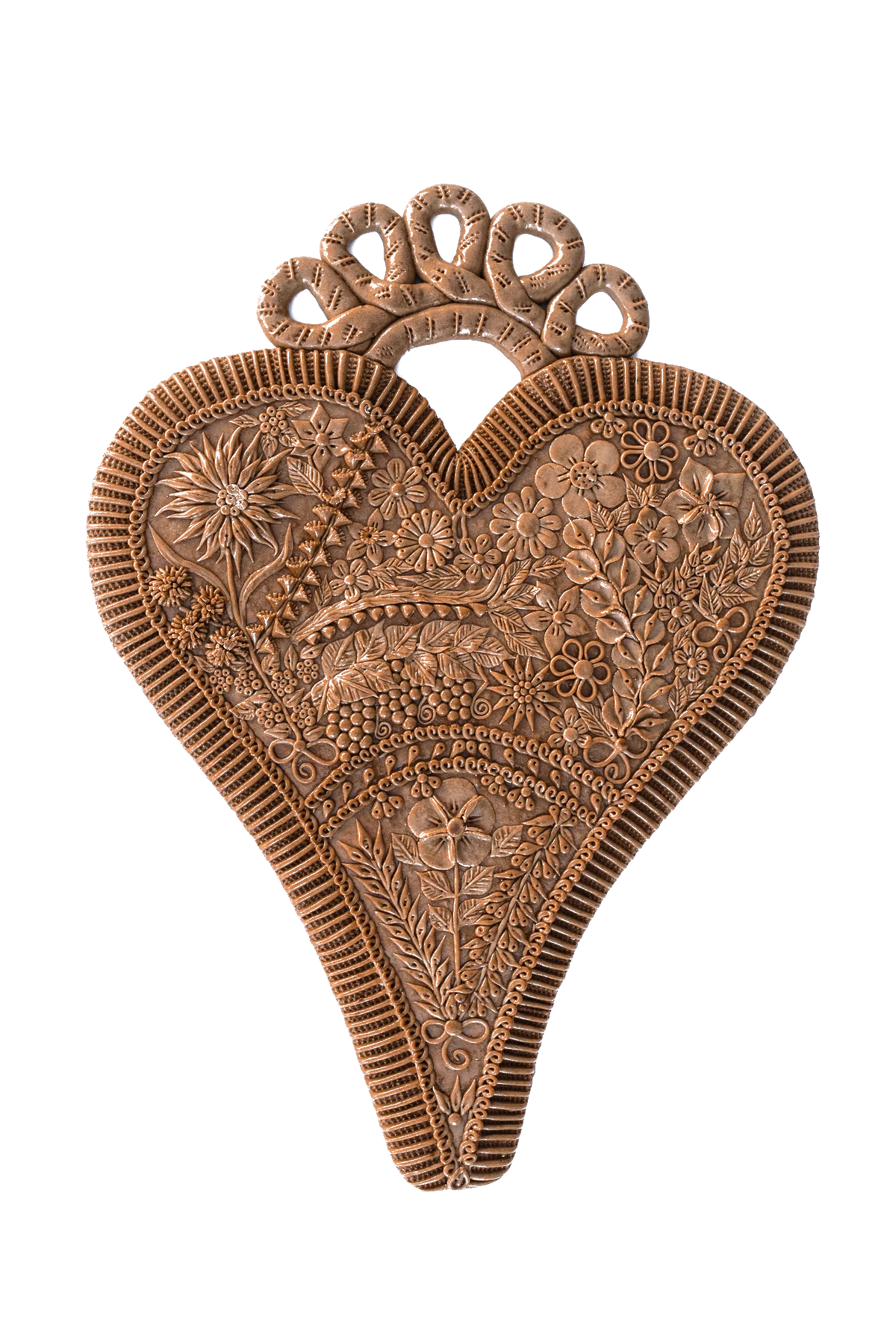
Another ethnographic treasure of Dražgoše is the “Dražgoše honey bread”, made from honey dough and decorated by hand with unique folk ornaments. The making of Dražgoše honey breads goes back more than 200 years and is still passed down from generation to generation.
Dražgoše also made barrels for transporting nails, sauerkraut, fruit, honey, cement and more. At the end of the 19th century the coopers joined a coopers' cooperative based in Češnjica. At that time there were 8 coopers in Dražgoše.
The Dražgoše tragedy
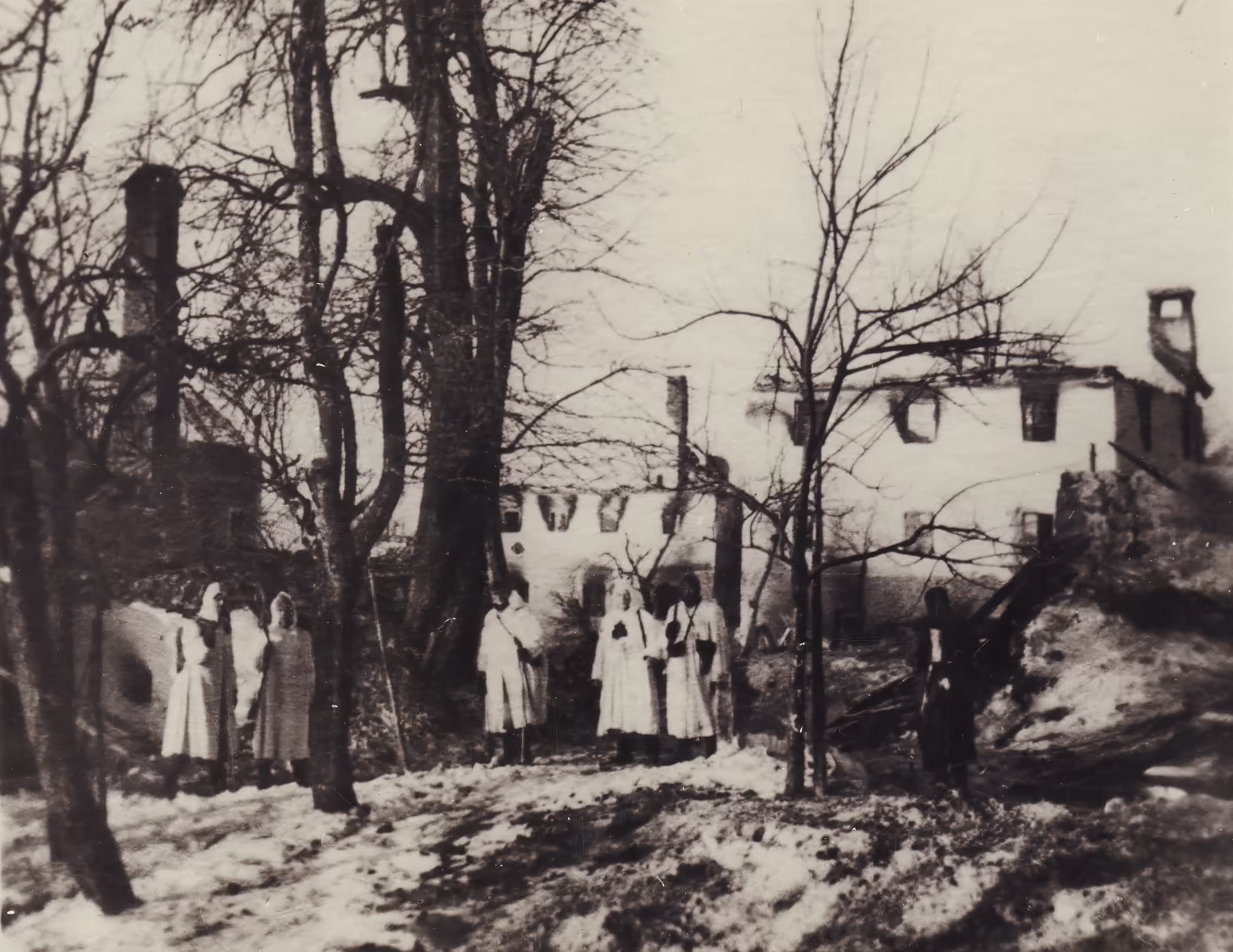
From 9 to 11 January 1942 Dražgoše was the scene of a battle between the partisans of the Cankar Battalion and the German occupiers. The Germans shot 41 men as hostages, deported the other inhabitants and burned the village, and in February they also blew up the walls.
German army in the burned Dražgoše · Archive: Kranj MuseumDražgoše after the war
Return and rebuilding
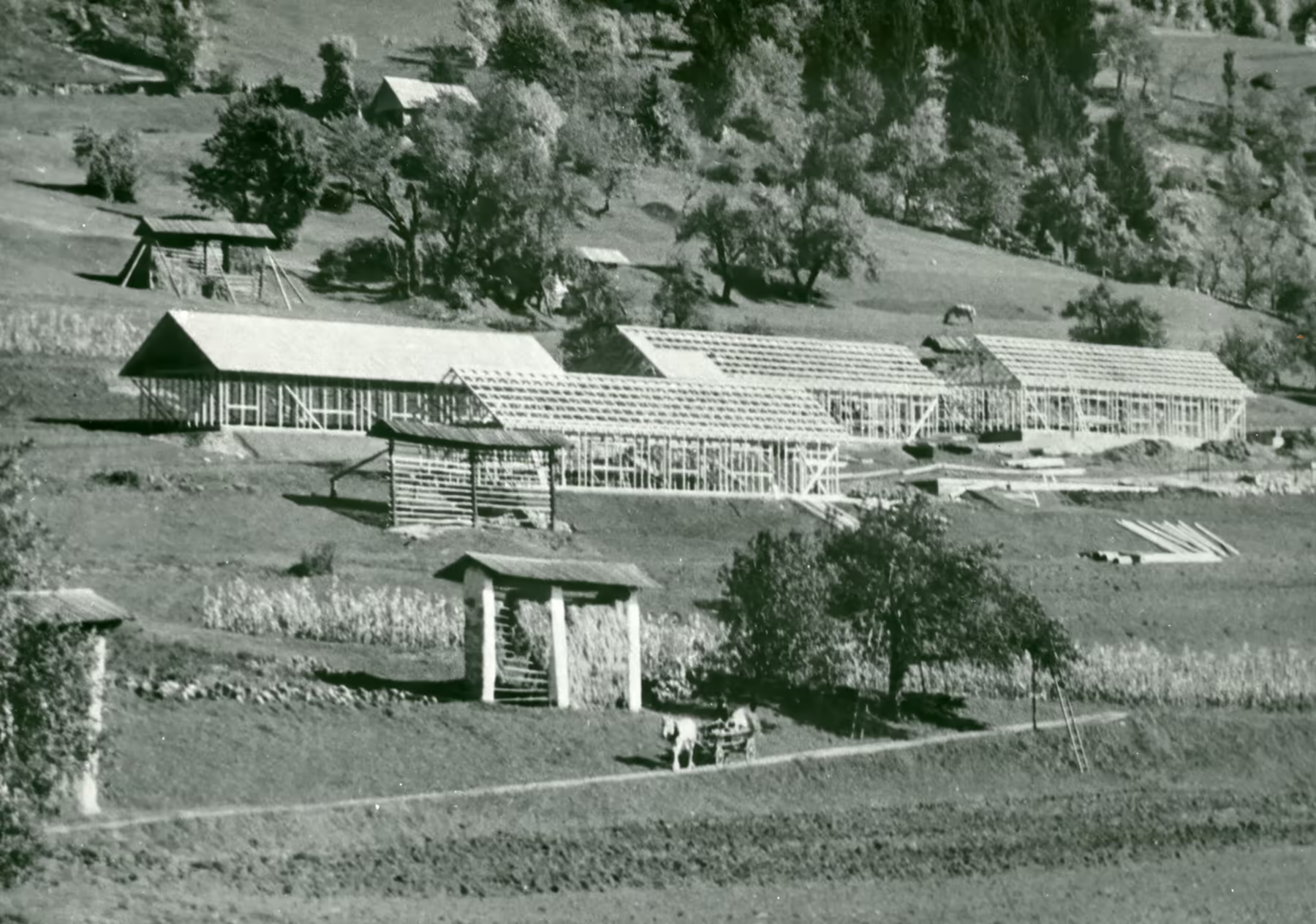
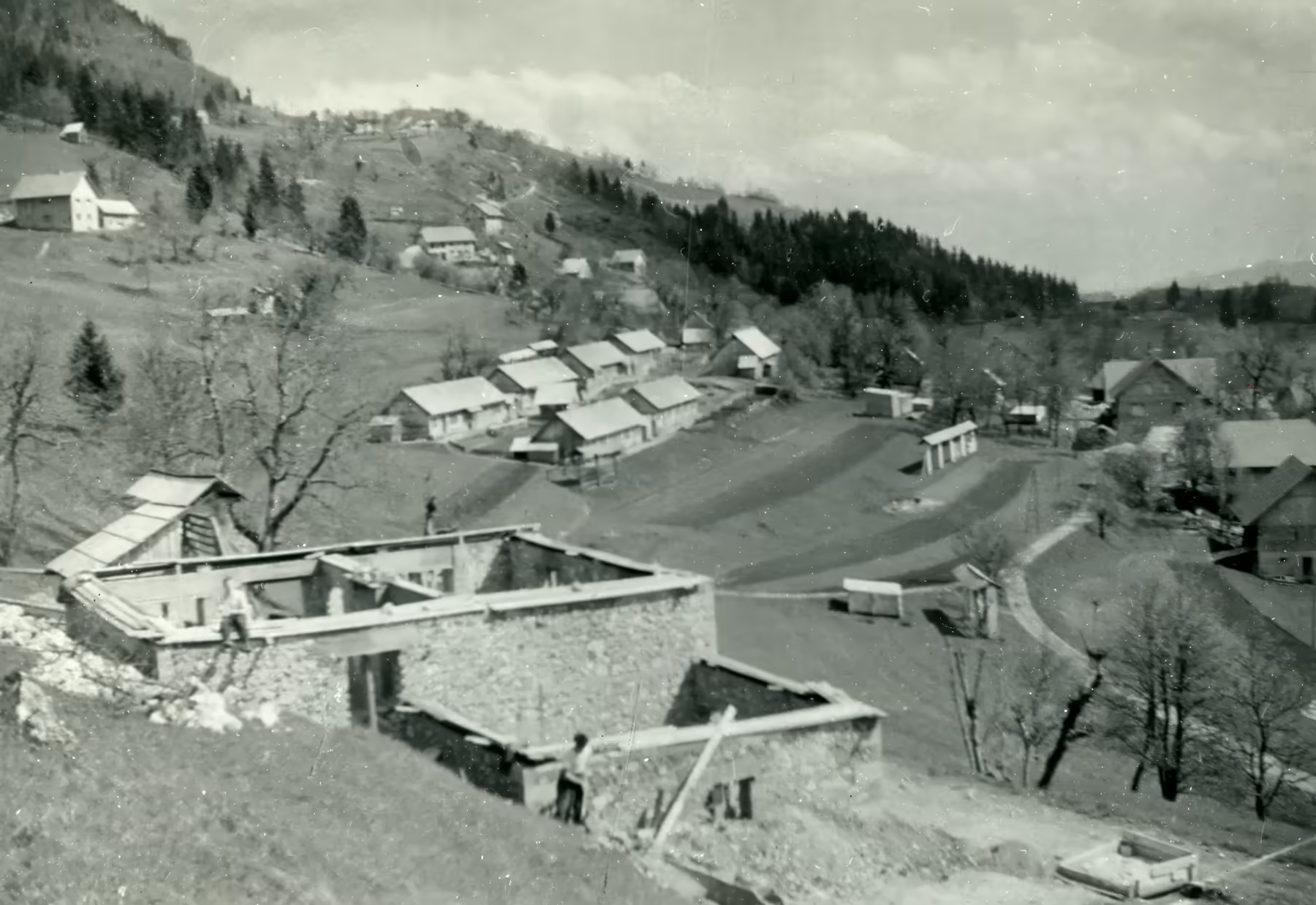
Soon after the village was blown up, the people of Dražgoše began returning to their ruined village to work their land. After the war many displaced villagers came back. At first they lived in wooden barracks, which also housed the school, the church and the community hall. The timber and building material for the barracks was brought by lorry to Rudno, and from there German prisoners and volunteers carried it to Dražgoše on their shoulders.
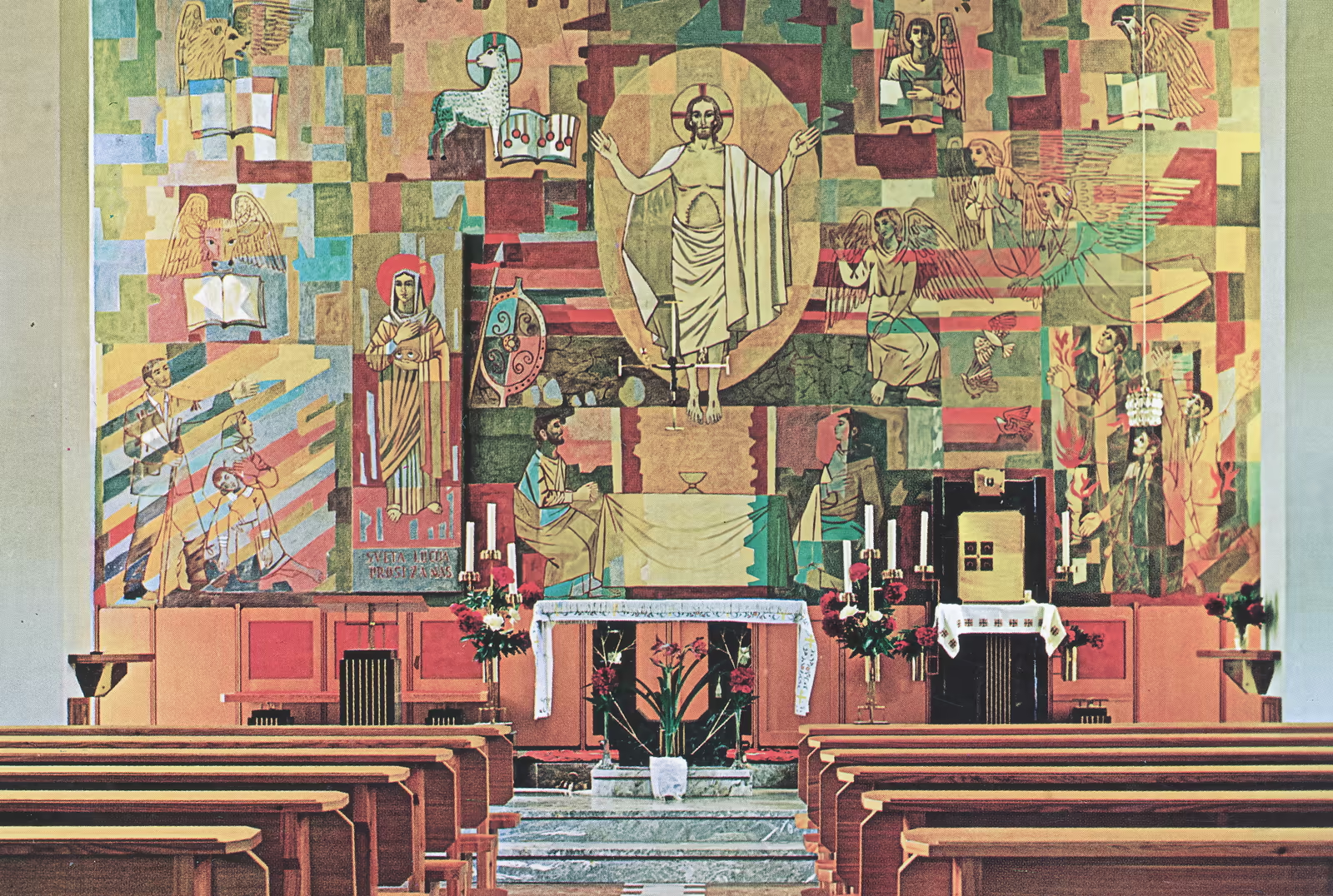
A road suitable for lorries reached the village in 1949. It was begun by German prisoners and completed by workers from Prekmurje and by the villagers. The rebuilding of the village was organised by the Reconstruction Cooperative, which set up a sawmill. The cooperative bought timber and sold planks, and the money from the timber was used to finish the road and build new houses and barns. A new school (1958) and church (1968) were built. The church was designed by Anton Bitenc; the frescoes and painted windows are the work of Stane Kregar.
Dražgoše today
Today most people from Dražgoše commute to work down in the valley, to Železniki and Škofja Loka. The village is home to successful businesses in many fields: transport, floristry, forestry services, chimney sweeping, forestry, locksmithing, catering, computing, IT …
Sadly, farming – once the main activity – is increasingly being abandoned. To keep the countryside alive, farms need more activities, above all livestock farming and forestry, and there are also opportunities in tourism.
How to get to Dražgoše
From Radovljica via Kropa
From Kropa the road climbs past Jamnik and on towards Dražgoše.
Via Besnica and Podblica
From Kranj through Besnica and Podblica, on a winding road below Jelovica.
Via Železniki and Rudno
Along the Selška Valley to Železniki, then uphill through Rudno.
From Bohinjska Bistrica across Jelovica
On a gravel road across the Jelovica plateau, through the forest to Dražgoše. Check that the road is passable before you set off.
The roads are narrow and winding, with several hairpin bends. In winter, check road conditions and carry winter equipment.
What to see
in Dražgoše.
The church of St. Lucy
The new church was designed by the architect Tone Bitenc, a student of Jože Plečnik. The frescoes inside were painted by Stane Kregar; among his scenes are memories of the Dražgoše tragedy.
Before it was built, a wooden barrack stood here, where Mass was celebrated after the war.
The old church of St. Lucy
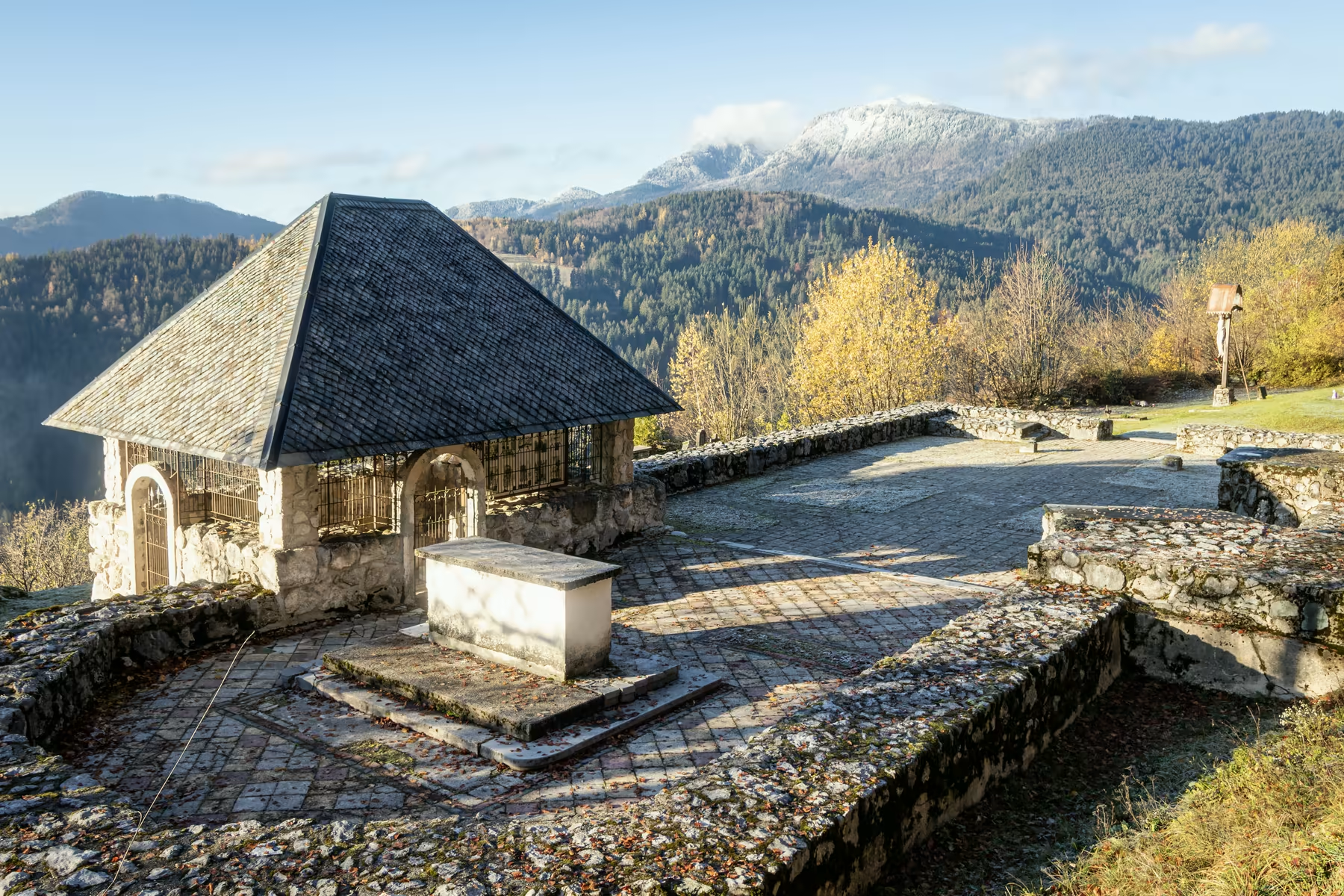
The church, built between 1642 and 1647, was burned and blown up together with the village in January 1942. The village cemetery remained beside it, and above it stood the chapel of St. Lucy, which no longer exists.
The ruins were later turned into a memorial site: the preserved floor, the low rebuilt walls and a concrete altar table where the main altar stood still show how large the church was.
Before it was blown up, the golden altars were dismantled and taken to the Capuchin monastery in Škofja Loka, thanks to Anton Kržišnik and his helpers. Today they can be seen in the chapel of Škofja Loka Castle.
Monument to the Battle of Dražgoše
The monument above the village is also an ossuary: the bronze ossuary with reliefs holds the remains of villagers and fighters, victims of January 1942. The monument was designed by the architect Boris Kobe, and the ossuary was made by Stojan Batič.
Below the road there is a 16 m² semicircular mosaic by Ive Šubic with scenes from the Battle of Dražgoše.
Dražgoše Museum
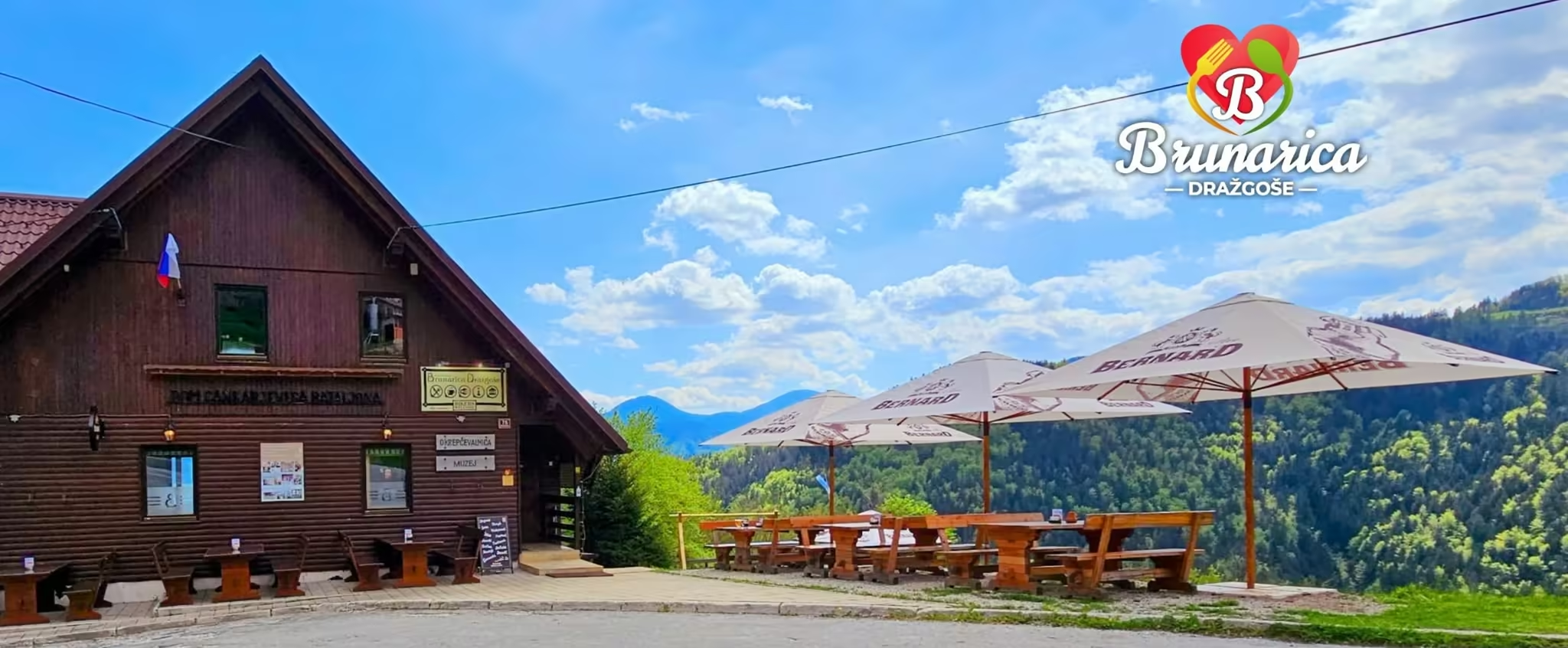
In the same building as Brunarica Dražgoše there is a permanent exhibition of the Loka Museum on village life before, during and after the Second World War.
Photographs, documents and objects tell the story of the village in those years, including the homes destroyed by fire. You can visit the collection during Brunarica's opening hours; more on the Loka Museum website.
Dražgoše
honey breads.
The history of Dražgoše honey breads
Dražgoše honey breads are an ethnographic treasure: artfully made breads of honey dough, each decorated by hand with unique folk ornaments.
This is the story of how the Dražgoše honey breads came to be:
It was 240 years ago, perhaps a year more or less, that Janez of the Zakališnik farm lived in Dražgoše, a sturdy farmer and respected beekeeper. After his wife's death his three daughters brightened his days and gladly fulfilled his wishes. One day he talked with his eldest daughter, who kept the house, about what it would be like if the next morning she kneaded the bread with honey instead of water. Manica took her father's advice, poured flower honey into the flour in a clay bowl, kneaded a few small loaves and baked them in the bread oven. “This honey bread is truly delicious,” her father praised her. “And what a lovely golden-brown colour it has, like autumn leaves,” her sisters added. The Zakališniks baked the honey bread many more times, offered it to their neighbours, and soon word spread of the little Dražgoše honey bread.
One of Janez's daughters joined the Poor Clares in Škofja Loka. She told them about the honey bread her sister baked up in sunny Dražgoše, and soon the nuns were enjoying the honey treat in the convent. Before long, market women and pedlars in the Škofja Loka and Kranj areas were offering the little Dražgoše honey bread.
Our grandmother Pavlina Ambrožič also learned to bake Dražgoše honey bread – a craft brought into our family by her great-grandfather – following her mother's instructions. As a girl of twelve, under her mother's careful guidance, she kneaded her first honey dough and so continued the family tradition. With her honey breads – a heart, a jug, a star and other shapes, decorated by hand with a knife, a toothpick, pincers and a small wooden roller – she delighted people on birthdays and anniversaries all over the country and abroad, in Austria, Germany, Italy, America and even Australia. She always hoped that her work would be passed on to the next generations.
Her wish came true a good twenty years ago, and so we, her two granddaughters, have carried this lovely craft into the fifth generation and are happily passing her knowledge on to our children.
We are proud to have learned how to make Dražgoše honey bread, and we still make it according to our grandmother Pavlina's recipe:
Put the flour in a bowl, make a well and add ground cloves and ground cinnamon. Dissolve the baker's ammonia in a little lukewarm water. Heat a jar of honey and pour it, hot, into the bowl with the flour. Mix and add the dissolved baker's ammonia. Adding more flour, knead into a firm dough and shape it while still warm.
A honey bread as a gift
or a memory of Dražgoše.
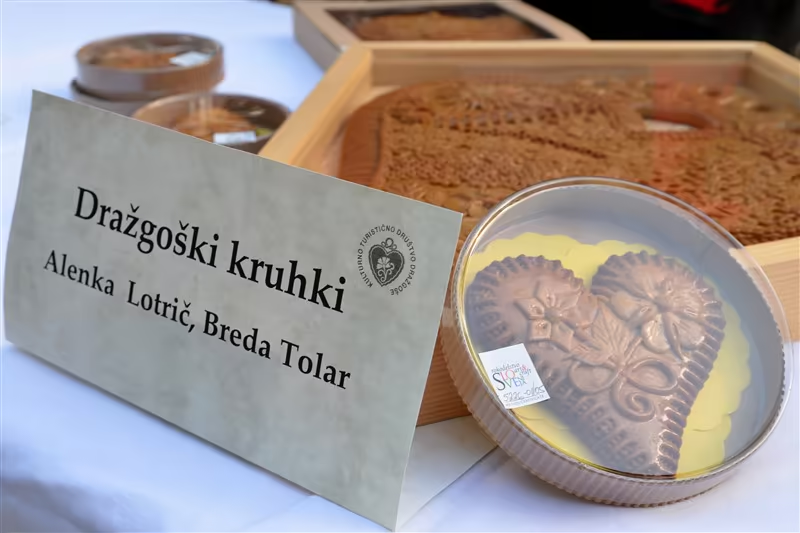
Dražgoše honey breads are made by Pavlina Ambrožič's granddaughters. To order or see them, contact them directly:
- Breda Tolar
- 031 800 053 · bredtol@gmail.com
- Alenka Lotrič
- 031 732 717 · lotric.alenka@gmail.com
A stop
with a view.
Brunarica Dražgoše
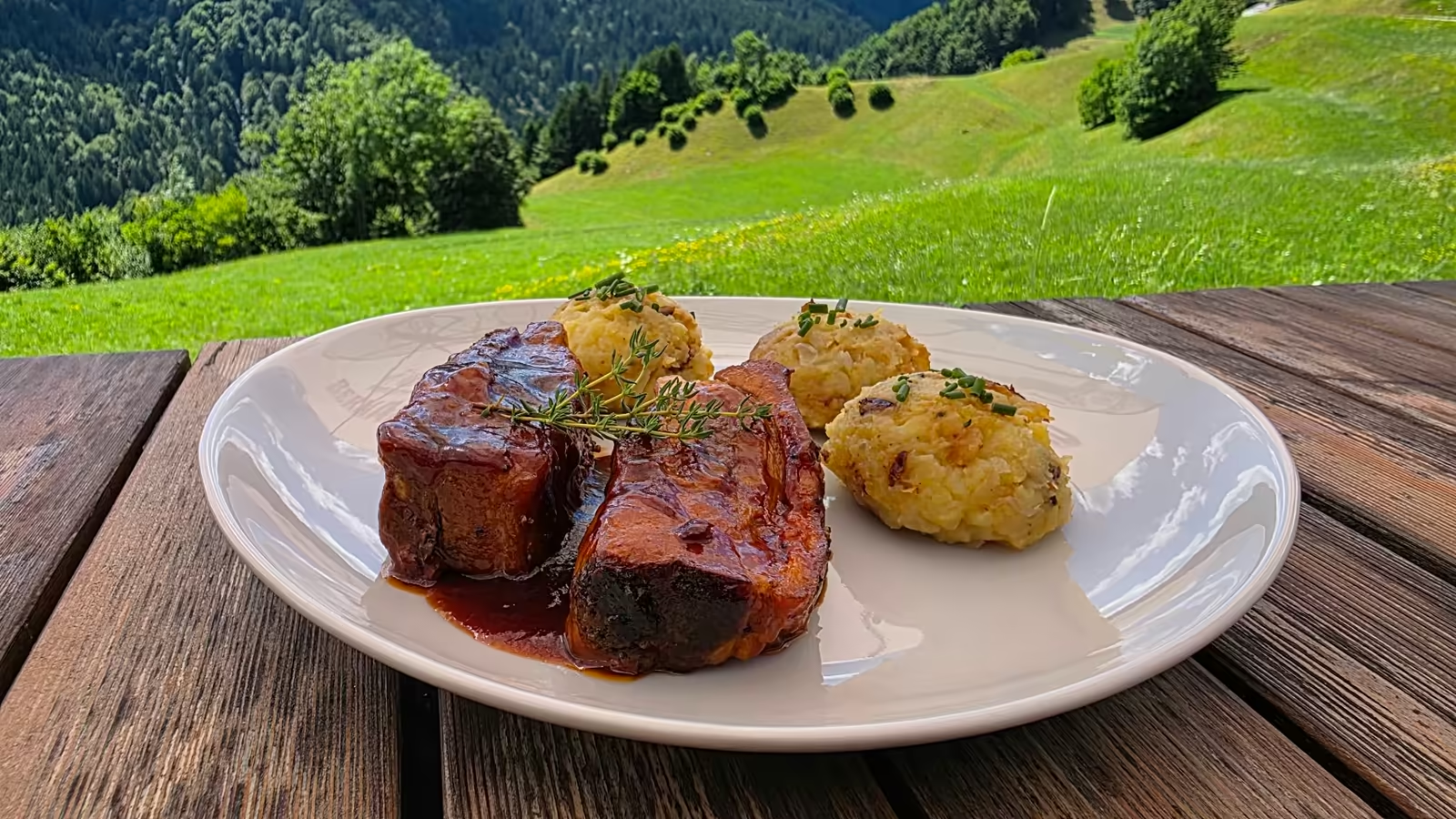
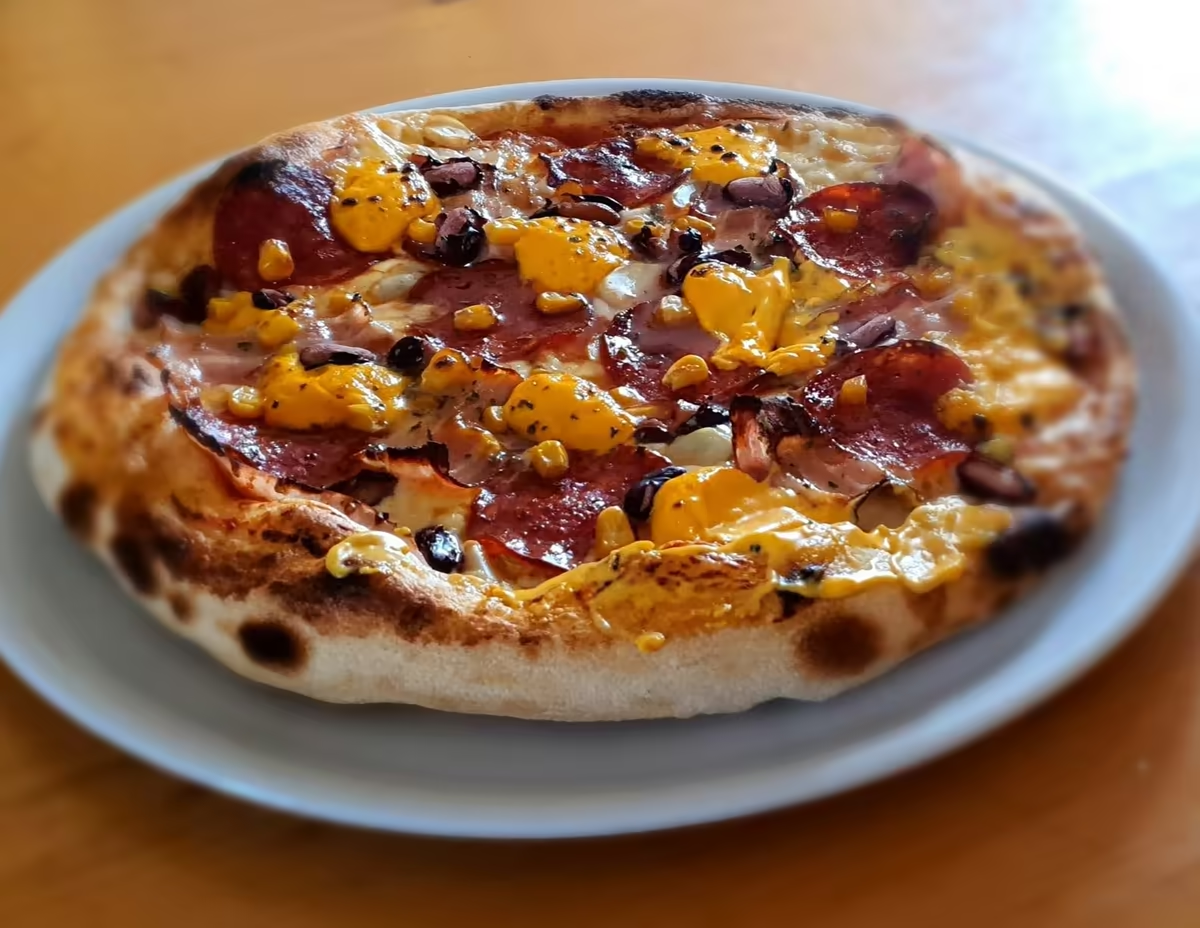
The best stop in the village for a cold beer, the view and good food. In summer cyclists, hikers and paragliders meet on the terrace under the parasols, and the view reaches across the Selška Valley all the way to Ratitovec. It is known for pizzas you can put together your own way. Menu, news and opening hours are on their website brunarica-drazgose.si.
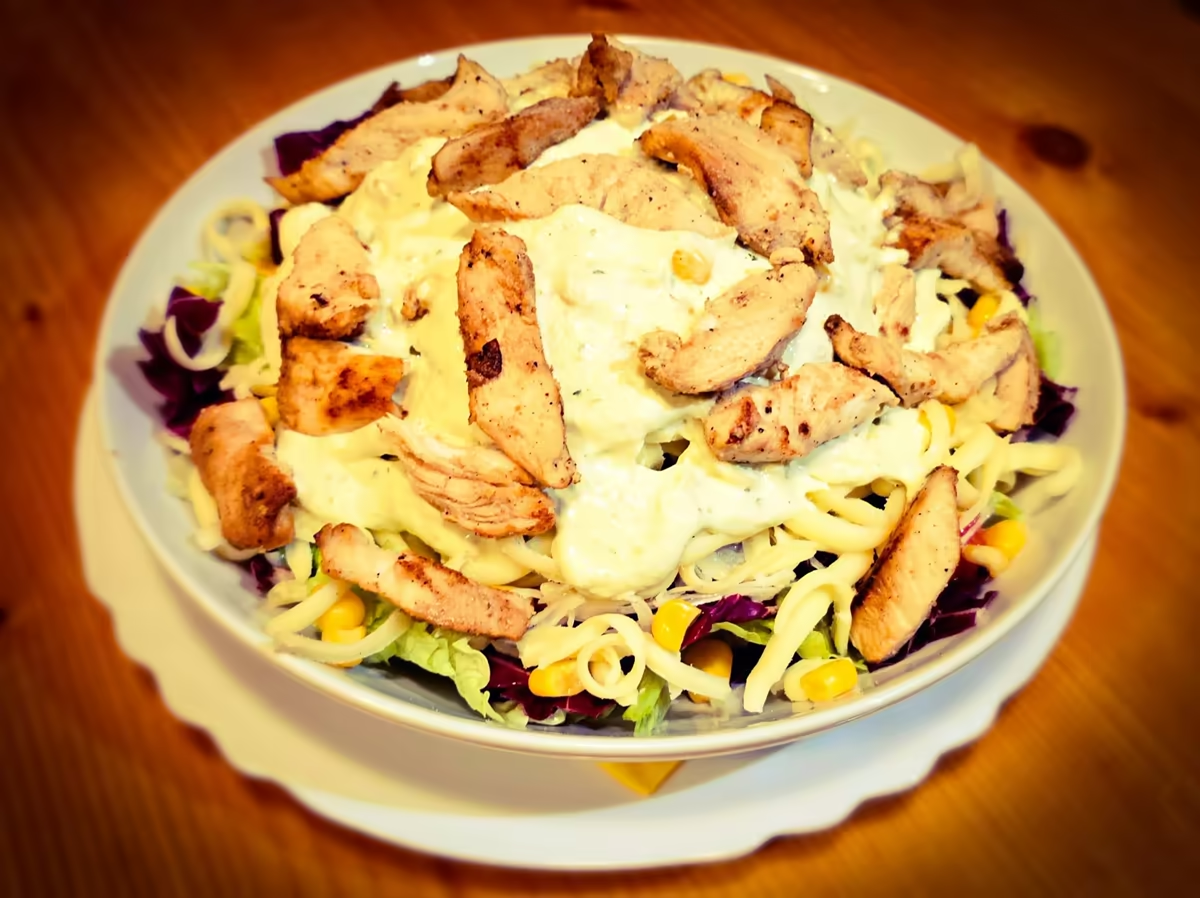
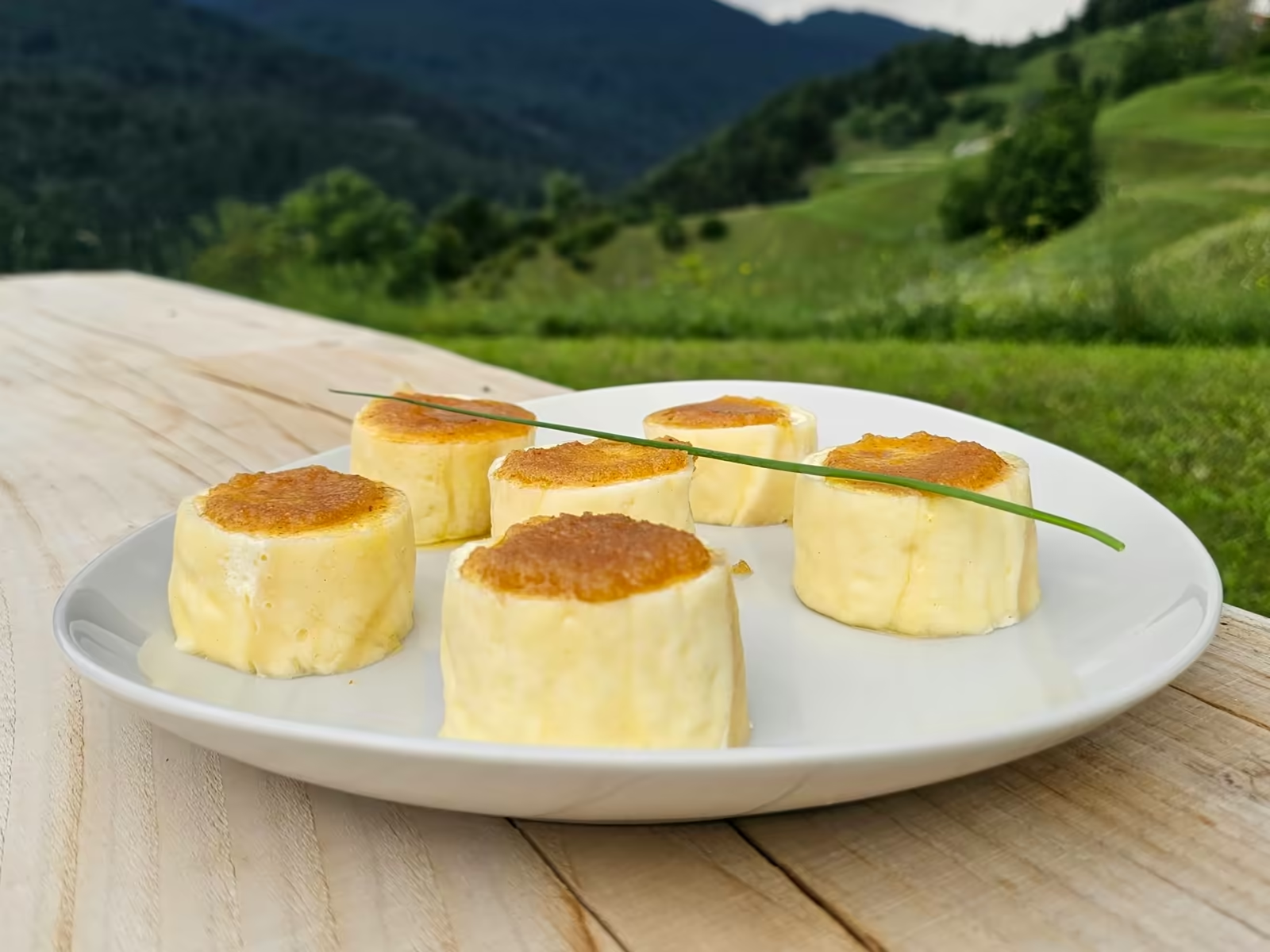
The menu also offers home-made stews and soups, grilled dishes, trout, pasta, salads, fried dishes and desserts, with drinks from the bar.
Dražgoše 75 · tel. +386 4 514 68 35 · check opening hours before your visit
Photos
from Dražgoše.